Sunday, March 6, 2016

SLA land acquisition The sure way to destroy the JCC community

SLA land acquisition The sure way to destroy the JCC community
SLA has announced that they will acquire the whole of Jurong Country Club (JCC) in 2016. The land is required for the building of the High Speed Train (HSR) station and also general development i.e shopping centres, hotels, offices and residential homes.
Singapore has transformed itself from just a port and backward country to one of the more famous cities in the world. This is the 50th year of independence. In these years one can see tremendous amount of changes to the landscape. Whole villages have disappear and many iconic buildings torn down. In the name of enbloc development fairly new apartments and to the extent of an entire housing estate (outram park) are torn down. In all these events the human cost has never been factored. This round of land acquisition is probably one of the most glaring in this new land development. In involves a whole community that literally makes up 2 percent of our population.
The Jurong Country Club Community.
Most people will associate a golf club with golfers. JCC is more than just a golf club.
The Club was set up 40 years ago to provide for a recreational area and a green lung for the then upcoming industrial Jurong area. It was to be the recreational home for all the residents and working people in this new region of Singapore. This area was then fairly isolated from the rest of Singapore. Thus it was built on a sizable amount of land. This was an area of swamps and thus useful for a recreational area.
As such the club boasts of 8 tennis courts, an Olympic size swimming complex, squash courts (at one time even a competition squash court which is mothballed) and a huge driving range.
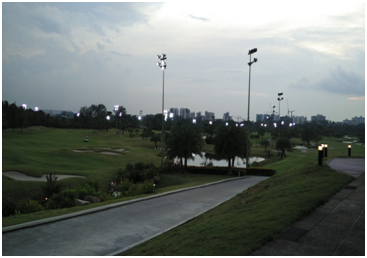
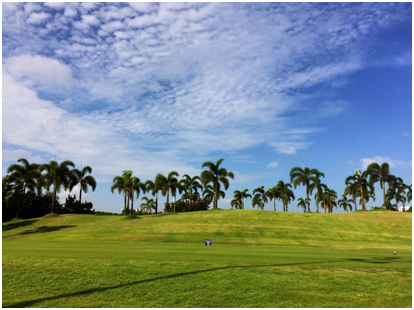
After a $24 million revamp in 2010, the club can boast of probably as one of the best playing golf course in Singapore. Few will know that in an extremely urban built-up area, we can built such a high quality golf course. This can be said as a marvel to all cities in the world.

My second home
JCC has 2800 members with the vast majority being golfers. A survey of its membership high lights that more than 60 percent of its members are above 60 years old. To many of these members JCC is their second home. It has become a fact of life they can be seen at the club daily.  I am sure in these behaviour is the same in all golf clubs in Singapore.
Generally golfers can be divided into 2 groups.

The exercise crowd.
Walking on the golf course is a very good form of exercise more so for those above 60’s.The majority had been active in their lives. Walking on the golf course be it with your spouse or friends is a very different experience than walking in the park. The views are fantastic.  Everyday just as the sun rises you will see many golfers lining up to tee off, many with their spouses. The majority are pulling their trolleys. Some will play 9 holes while the rest will play 18 holes. All of them look forward to these daily routines. Everybody knows each other. Even for the solitary walk-in golfer, everyone is most welcome to join in the game.
In the parks, most walkers are strangers. At most one would smile to another. On a golf course one is never alone, its always among friends.

The serious golfer.
The serious golfer comes mainly in the afternoon. They would have done their chores either taking care of their family (marketing with the spouse or settling down the grand children) or completed their duties in their business. Most of these golfers take the game very seriously. In fact some of them train like professionals. Some even invest in the latest clubs so that they can play a better game. The majority of this group are also participants in the social activities after the game.
Both these groups enjoy great camaraderie.  There are always cheers for the great shot. No body remembers the bad shot. Even long after the game the stories of the good shots never end.
Golf is a game of friendship. One plays off his handicap, so there is no advantage for youth neither for those with brawn. For any individual the game that is ever changing. As they say one can never hit the same shot twice. It is also a game where the beginner can play with a season player. The handicap system takes care of the difference in skill level. A full game takes about 4 and half hours. This is the perfect setting for those retirees to whilst away their time. For those in business it also gives them an opportunity to size up their partners and also an opportunity for intimate discussions.

The golf committee.
JCC is a members club. Thus members volunteer to sit not only on the management committee but also various committees to ensure the smooth and successful running of the club. 40 years of club history can attest to this dedication to volunteerism in Singapore. A golf club is a good place to cultivate volunteerism.

The greens committee.
After the $24 million makeover of the course, JCC has been hailed as one of the best course in South East Asia. In fact for its location in the city, there no other golf courses that can claim this title. Kudos must be given to the group of dedicated members who were not only involved in the construction but also maintenance of the course. The constant problems arising and finding solutions to solve them rest solely on a group of dedicated people whose rewards are just a pat on their shoulders. These are also people who have learned very special knowledge about developing a city base golf course. It is such a shame such expertise is not acknowledge by our government who is so keen to promote life long learning.
Recently the course was voted the third best golf course in Singapore. In the words of our captain it is because the two better clubs had much more money, land and prestige. I am sure all golfers from other clubs having played in JCC will attest to it.  

The Driving Range.
JCC boast very big driving range. This is the only driving range on the west side of Singapore that is easily accessible to the public. As an indication to importance, it is always crowded especially on weekends and evenings. There are a lot of golfers who are not members of any golf courses coming to hone their skills. The driving range is really a sports hub, where friends can meet.

The Golf School.
There is a golf school in the driving range. This caters to people from all walks of life. Most important there is a very active junior programme that allows very young people to take up golf. This school uses the smaller course in JCC to conduct real instructions. Not too long ago our government was promoting golf as a important sports. It seems they must have changed their mind.  The junior sports programme will definitely disappear.

The Sports Facilities.
Tennis section.
There are 8 tennis courts in JCC. This is probably the largest concentration of tennis courts in any club in Singapore now. Just like the golf junior programme, there is also a very active tennis program. Just check with the large Japanese community who send their children there for training. Once these 8 courts disappear it would be very difficult to find another place to play tennis. It will also mean the end of opportunities for tennis coaching.

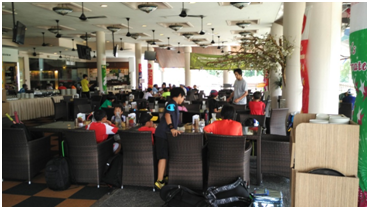
Japanese children having lunch after their tennis lessons

The Squash section.
Squash is a dying sport in Singapore. However in JCC there are about 25 very active squash players who will meet 3 times a week to work out their bodies. These range from teenagers to many above 60 years old, in fact the oldest is 73 years old. The keenness of this core group is remarkable. They have strongly encourage their children to take up this sport. Quite a few have gone on to represent Singapore. Regular friendly squash gatherings are held with other clubs or associations.

The Swimming section.
This is probably the only Olympic size pool with competition facilities accessible to public training in the western part of Singapore. The distinct advantage is half the pool can be blocked up for training lanes without complains from other users. The training programs are very active. Plans were also drawn up to improve the swimming facilities to offer resort style settings.
Sadly Singapore has lost many of its public swimming pools. No doubt there are many pools in condominiums, they are not mean for training purposes as they are not built to sports standards. Increasingly our population is finding it difficult to find a pool as a source of exercise ground.

Swimming training in progress
Obviously there are many more sports and social activities found in the club. In fact the problem holding up the club from more activities is the government strict interpretation of built up area and its accompanying charges in exceeding such permitted allowance.
Can you imagine the view from that apartment? What price would you pay for that view? The value of the surrounding buildings will be greatly enhanced with this view.

Paradise lost.


Recently the botanical gardens obtained its designation of a Heritage site from Unesco. The government must have spent a lot of effort, time and money to obtain this status. If you ask yourself when was, it the last time you visited the botanical gardens, I am sure it most would have a hard time remembering.
Just like the Marina Bay area development, many hotels and offices surround the water giving them a unique view and ambience. Obviously just like Central Park in New York, many important buildings and luxury apartments can be built around JCC. When that theme is fully developed it will be the talk of the world crowd. Recently when the famous EPL football players came to Singapore, the first thing they did was to play golf!.
Most Singaporeans travel very far and wide to visit places they were told are paradise. In such areas the views are a dream to behold. Most of our houses are so cluttered that standing in any wide expanse of land is a sight to behold. If one lives in an apartment, most of the time you have to walk downstairs out of the building before you can see the sky. Obviously they did not know there is a paradise in Singapore at JCC.
Yes our society has developed very successfully. In fact we have become one of the nations with the highest per capita income. Many people feel they are left behind.  They see the trappings of the wealthy with the fast cars and expensive houses. Isn’t it a familiar enquiry when one Singaporean meets another Singaporean when they have just met, is the question where ones stay so that they can estimate your wealth. In the last general elections the wealth differential was seriously highlighted. So now it is politically correct to take away such opportunities for the better off crowd as a means of equalising our society.
From time immemorial, our country has encouraged setting up communities to take care of themselves, to take up active volunteerism, encourage a sporting and healthy lifestyle and undertake lifelong learning skills. These ideals do not seem to apply to JCC. Alas with our paradise soon gone, we may still meet up for a drink at the pubs or coffeeshop, gather in CCs doing line dancing, or greet each other as we passed on the park connectors and finally wake each other up at the library when it is time to go home.
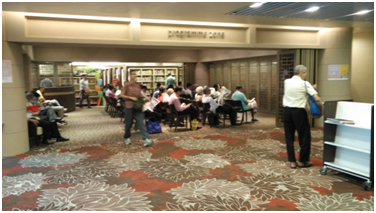
A favourite place for senior citizens is the Chinatown library, enjoying the aircon and having a nap. We can save a lot of space and  money by taking out the books.
Personally I cannot understand why we must always tear things down just for the sake of development. Does building a few more apartments, shopping centres bring us greater wealth and the resultant happiness? The world shops online, does business on computers, who will use all these buildings when they are ready?
Finally we will never hear “Good Shot” again.

Monday, October 20, 2014

Bad Singaporean Eating Habits

Food courts probably started its existence in Singapore. In the early seventies, in the effort to clean up the Singapore river and the environment, it was noted that hawkers plying the streets was a big source of littering and hence contribute to the pollution of the drains leading to rivers becoming an open sewer. Thus food courts were set up to house hawkers. This enabled the authorities to control not only the cleaniless but also the associated pests such as rats and cockcroaches. The indirect benefit was competition among the stalls led to very cheap eateries that benefited the man on the street. It was also very convenient for the population as all the local varieties of food can be found under one roof.
This transformation did not come easy. Many hawkers were reluctant to move into such a buildings as they felt that pushing their carts along the road or siting their carts at critical junctions gave them an advantage in gaining business. Thus there were many “illegal hawkers” who had to run when enforcements police came to catch them. Over time with continuous enforcement and also hawkers seeing the benefits not moving around food courts are part of our landscape. They are also a must standard feature in large shopping malls with diners eating in zircon comfort.

However Singaporeans may live in a first world country but their eating habits are still very third world.  Singaporeans are very fond of eating but when they eat at food courts their habits don’t differ much from pigs. They mess up the tables with their left over, don’t bother to clean up and just walk away from the mess. Fortunately we have cleaners to come and collect the empty plates and dishes. With increasing labour cost, these have become a big problem. To a foreigner setting foot into a  food court seeing all those rubbish pile on the tables, one must thought they have entered a pig sty.

Look at the mess
see i can finish my meal on my tray without messing up the table
the tray return trolley but look how full it is. Shows that a lot of people follow the campaign but  food centre workers don't know what to do.

see how neat it can be


Many years ago when you enter a food court the hawker assistant will come and take your order. They will also deliver the food to you and collect payment. This ended when labour cost underwent the first round of increase. So one must now queue for his food and bring to his own table. So if one can do that why can’t one return the plates to the stalls?  This is the difficult part.

Recently the government has started a drive to encourage patrons of food courts to return their trays at least to the tray return station. Some patrons have cooperated but sadly many have not done so, thus the tables are still a very unsightly scene.

One of my golf kaki suggested a monetary system to incentivise the population. He uses the example of the supermarket trolley. When you return the trolley, you can get back the dollar coin. If you don’t then someone else can return it for you to claim this dollar coin. So if the hawker charges one dollar more for the tray, then this encourages the diners to return the tray for a refund.


this is the trolley return station there is a coin lock on the top part of the trolley


Others suggest as Singapore is a “fine country” where fines are impose for littering, spitting etc, the government should also impose a fine on those who does not return the trays or clean up after eating. Fines have worked very well and if they still litter the table, then the authorities can make them clean up the food court. Ha ha, this sounds a bit drastic but it seems we locals are used to this sense of punishment

. More than ten years ago, I was at cafeteria in a Swiss supermarket having lunch with my family. After eating as we were about to leave the service lady came running to us and pointed to the tray return place. She also asked us to wipe the table. On a more recent note, I was in a food court in a Chiengmai shopping center, all the patrons clean up and return their trays.
So how come we Singaporeans have this bad habit of not cleaning up after eating and returning the trays?.

Monday, February 17, 2014

Pain Free keyhole Surgical Removal Of Wisdom Tooth

Pain Free Keyhole removal of Wisdom Teeth.
Dr Seow Onn Choong

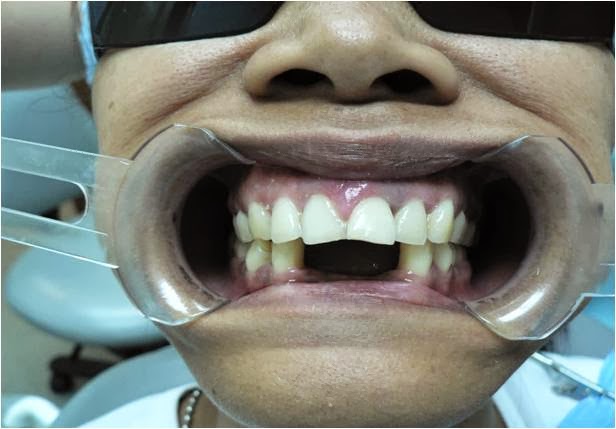
Last week a young lady walked into my clinic. Both sides of her face was swollen. She was obviously in a lot of pain. She was crying when she told me she had surgical removal of her wisdom teeth just 4 days ago.
Her left face was really swollen with an obvious haematoma. She told me that she had been not eating properly since she could not open her mouth and asked me to be very gentle. I reassured her that i will be very gentle as I have managed many of such conditions before.
On examination it was obvious the surgeon had made very large incisions to remove the wisdom teeth. To make matters worse there were many ulcers on her lips and her cheek. This is an indication the surgeon was very rough in handling the procedure.
As can be seen on photo lots of ulcers.


Why is there  a need to remove wisdom teeth.
The majority of people are born with the curse of the Wisdom tooth. There are usually 4 wisdom teeth in the mouth and they are the last molars to erupt right at the back of the mouth. There is a lot of variation in the numbers. Very few people are lucky not to have any wisdom teeth. Some have anything from 1 to 3 but 4 wisdom teeth is definitely the most common.
Not all wisdom teeth give rise to problems. Those who give problems are always associated with lack of space for proper eruption and thus the teeth are stuck. This is known as impacted wisdom teeth. Food gets stuck in the gap causing not only frequent swelling of the gums but also cavities. The most damaging consequence is when the tooth in front gets a bad decay resulting lots of work to save it. More often than not root canal treatment is required but the results may not be good and the tooth is eventually extracted.

Types of impaction.
Gum impaction.
These teeth are usually partially or fully blocked by the gums. Their removal is usually easy.
Bony impaction.
In this situation the tooth maybe partially or fully covered by bone. Those teeth that is lying horizontally poses the most difficulty as a gum flap is usually necessary followed by bone removal.

What is the possible reason why wisdom teeth cannot erupt normally?
Nobody really knows why the wisdom cannot erupt out normally. Maybe is an evolutionary problem. Why do I come to this conclusion?
The wisdom tooth usually erupts only after 18 years old. If one looks at history, dentistry as a profession did not exist about 100 years ago. So dental care was absent, not even tooth brushing. Dental decay was very common and most people would have lost some teeth before they reach adulthood. This is especially so for the first molars that erupt out when one is 6 years of age. Thus by the age of 18 the first molars would have broken down. Since the wisdom tooth comes out then, it can restore back the bite. Thus the last molar is known as the wisdom tooth because it comes out at the age when one is wise enough.
In the modern world this seems ludicrous. However if you know that more than 100 years ago the  life expectancy of most people were no more than 45 years you would be able to appreciate the importance of 4 more teeth.

My learning curve in pain free wisdom tooth removal.
Most dental students perform only a handful of cases during their student days. Even these few cases are selected ones so that no problem arises. As a young dentist I had my fair share of  my problems especially when along time is required. This usually ends up with a lot of trauma and unnecessary pain.
I found it extremely stressful and unrewarding in the struggle during the surgery. Thus I approached what was then the most famous oral surgeon in Singapore to teach me the art. He was known as the King Dentist because he drives a Rolls Royce then. He was very kind. He wanted me to spend some time assisting him so that I can see and learn. It proved to be a most invaluable lesson and since then i have little difficulty in the surgical procedure. Later I experimented further with different instruments and techniques so much so i can achieve literally pain and swelling free removal.

Pain Free Experiences.
My own daughter’s experience is a good example. On her second time of removal she was dressed up for sports. I asked her what she planned to do. She said she was going to play football after the operation. Wow I asked? She said after the last operation she rested at home and she was bored cos nothing happened. So this time she is very confident nothing will come about.

Another friend’s son came on Christmas eve. He was a university student. He was taking advantage of the long Christmas break. His story is worth listening. He had a dental student friend who persuaded him to be a demo patient by an oral surgery professor. To him it was a big mistake cos he said he suffered a lot during and after the operation.
That evening i sms his dad. The reply was “He is eating like a pig, absolutely no pain and he does not even feel that he had a wisdom tooth operation” How wonderful to hear such news.

Last year my ophthalmologist friend’s son was going to UK to study medicine. He needed a second wisdom to be removed. I had removed his one side and now it was the next side. She was so impressed by the first time she told me to document it and present it to my profession. I told her I doubt the profession will believe me cos i am just a gp dentist without the titles.

This is the latest feedback from one happy person
Hi Doctor Seow,

sorry this is so late, been rather busy. Anyway here's my experience on my operation.
It is my first time plucking out my wisdom tooth, i heard of many experiences where, people have to stay at home for 1 week because it is very painful, some of my friends, cant even take solid food, they just want to sleep the pain away. During the second day of work, my friend asked, "wow you pluck out your wisdom tooth and still able to eat?" and another friend asked my during supper asked "are you sure you can eat?" I told them, "i felt no pain after the operation." I believe they were surprised


Anyway do look at the pictures and see for yourself.

Before surgery


On recall 5 days later

Her xray


Before operation

Can't see the tooth in the mouth, buried tooth

On recall no swelling at all


His xray

The ideal age group to remove your wisdom tooth.

The wisdom tooth usually erupts at around 19 years old. This is also the best time to remove them. At this age the roots have not fully formed and thus not hardened. The bone socket they are in is still soft. This is to allow the roots to grow fully.  These are important factors that contribute to the easy  removal with much less risk of root fractures or damage to the inferior dental nerve.
As the site has not been affected by chronic infection or accumulation of bacteria colonies, healing is usually very swift and good. Infection usually cause further pain.. Without infections, antibiotics are not necessary at all.
A lot of people refuse to remove their wisdom tooth at this age usually due to ignorance. As a result with chronic food trap and inability to clean the site the neighbouring tooth develops a deep decay. By the time pain shows up the decay has affected the nerves.This  tooth needs root canal treatment followed by a crown. This is a troublesome and costly problem. As this is a difficult tooth to perform root canal treatment, most cases end up in failure and have to be extracted. All these suffering could have been prevented if the wisdom tooth is removed early.


Monday, June 17, 2013

Gum disease. Understanding, Treatment and Prevention for Life

Gum disease. Understanding, Treatment and Prevention for Life

Dr Seow Onn Choong

Recently in a Ministry of Health survey highlighted that 85 % of Singapore’s population has some form of gum disease. Gum disease is the greatest cause of tooth loss in advance nations. The result of this survey is definitely not flattering. Throughout the years we have trained so many dentists. All our children are taken care by the school dental services from primary level until they reach university. Adults can attend polyclinics and the many private dental clinics in and around the neighbourhood. So other than for those who really cannot afford dental care there should be no reason for the poor showing?

In this article I would like to share with you my own experience on how I treat my patients.

 Gum disease is a multi factorial disease. Some of us are blessed with the right genes and thus seemed to have saliva that can keep the problem at bay. The majority are not so lucky and need to work hard at it. Furthermore they also need to find a dentist who not only can manage the problem but also teach them how to prevent it from progressing. If you can experience what my patient goes through, it would definitely help you to retain all your teeth for life. This article would be of interest not only to layman but also to all dentists. No doubt there will be sceptics among readers especially among other dentists; it has worked well for me and my patients.

What is gum disease?
Periodontal (gum) disease is an infection of the tissues surrounding and supporting the teeth. It is a major cause of tooth loss in adults. It can be categorise broadly into 2 stages:
1) Gingivitis: This the early stage of periodontal (gum) disease. The gums can become red, swollen and bleed easily. At this stage, the disease is still reversible and can usually be eliminated by daily brushing and flossing
2) Periodontitis: This is the more advanced stages of periodontal (gum) disease. The gums and bone that support the teeth can become seriously damaged. The teeth can become loose, fall out or have to be removed by a dentist.
Causes of gum disease
Periodontal (gum) disease is caused by plaque, a sticky film of bacteria that constantly forms on the teeth.  The idea behind its treatment is so simple, if one can remove this film of bacteria then gum disease will disappear. As usual it is easier said than done. We are all told to brush our teeth twice a day with all sorts of toothpaste available. We are also bombarded by adverts that mouthwashes can effectively remove all 99% of the bacteria. With all these plethora of anti plague materials at our disposal, there is definitely no need to see a dentist as gingivitis would be easily manage and not progress to the dreaded periodontitis.
Now why is it with such a simple solution yet many people suffers from it to the extent of losing their teeth?.
The problem lies in patients and dentists mindset. Let me elaborate.
To make it easier for the layman to grasp the concept of dental disease, think of it as the rusting of objects made of iron. Things made of iron being such a hard metal can be destroyed but rust. If you look at cavities, bacteria digest sugars to form acids which in turn breakdown your hard tooth structure. Your teeth are so hard that you can even crush bones and chew your food like a crusher yet it is amazing that bacteria can use such a route to soften and destroy your teeth. Once the bacteria reach the nerves in the pulp, it causes inflammation and the resultant toothache. Well if you cannot take the pain then the tooth must be extracted.
In gum disease a different set of bacteria is involved. The method this group of bacteria uses to cause you to
lose your teeth is even more amazing. It is like the bone and gums rusting away.  So simple that it makes it difficult for most people to understand. It results in why most people still lose their teeth to gum disease.

Lady complains she has a loose tooth

Using a mirror one can see the tooth has
grown longger


No choice but the tooth has to be removed
You can see the barnacle like
tartar covering the root


Mode of Action by the gum disease causing bacteria.
The gums are like your skin that protects the bone which in turn holds up your teeth. The teeth is not directly fused to the bone but held in its bone socket by a mesh of ligaments. These ligaments provide a suspension so that shocks involved in the chewing process are dampened and does not result in your teeth cracking. The ligaments are stuck to the root of the tooth through a cement-like layer known as cementum. In a new tooth the cementum covers the root surface. Underneath this cementum is the dentine layer. The dentine is made up of tubules, each of it have a nerve inside. The inner end of this tubule is connected to the pulp which is made up of blood vessels and larger nerves. The gums are connected to the tooth by ligaments too but just to a small surface area of the root. A small gap exist between the junction where the enamel meets the dentine i.e the part of the tooth exposed to the mouth and that part that is buried in bone. This is known as the periodontal space. This is also the tooth’s Achilles’ heel.
Once again, just as in the process of formation of cavities, many types of bacteria are involved. One group of bacteria produce a sticky film to adhere to the surface of your teeth just like algae sticking to wet surfaces. Through this process they are able to colonise the periodontal space. At the same time they produce toxins which your body can detect. Your body’s immune system goes into action and rushes to the site.  As these antibodies travel only in the blood stream, they cannot cross into the surface of your teeth which is bathed in saliva. So it is a case of the bacteria is in your mouth but not in your body. As these antibodies are destroyer cells, their accumulation at the gums causes the gums to be inflamed and swollen. This is the reason for bleeding gums.

The worst is yet to come.
However this is not the end of the story. The destroyer cells also destroy the bone underneath. As the bone is destroyed, the ligaments are also destroyed. This enable the bacteria to migrate down the root to colonise the cementum layer which being a rough layer is ideal for the bacteria to colonise. At the same time a second and more deadly process occurs. The bacteria absorb calcium from your saliva to harden itself into what we call tartar. This is nature’s way for the bacteria to protect itself. Tartar formation is very similar to the formation of barnacles, the shell like objects we see forming on all rocks and even on bottom of ships. This gives you an idea of how tough it is to get rid of the hardened deposits on your teeth.
To make matters worse, the swollen gums now cover this tartar layer shielding the bacteria from your tooth brush. During tooth brushing, the swollen gums bleed easily, so much so most people dare not brush the gums at the gingival junction. This leads to a vicious cycle of more and more tartar build-up with more and more bone destruction. A pocket is now formed. The bacteria, now has a safe haven and launches a guerrilla war against its host.

Periodontitis.
This is the chronic phase of the disease. Bone is continually destroyed. Occasionally there will be swelling of the gums, with associated pain. However there may be very little bleeding as most of the external gums is like scar tissue. At this stage the symptoms are easily overlooked by the sufferer. The main complaints are bad breath and sensitive teeth. With the mass media touting the efficacy of mouthwashes and desensitising toothpastes, most patients reach for these remedies. They are ignorant of their deteriorating condition. This is also the stage that is extremely difficult to treat. I will explain this when I highlight the different type of instruments involved in treating gum disease.
Prevention of gum disease.
Prevention is obviously the best form of treatment. This must start at a very early age i.e as young as   the first teeth have erupted out. Proper cleaning of the teeth and forming a habit of it, ensures that the child grows up with a set of good dentition.

The proper toothbrush technique
Proper tooth brushing technique is very important. The best method is to follow the contours of the gums. As you can see your gums meet the teeth in a semi circular shape, thus the brushing must be in a circular manner. It should also be angled to the junction where the gums meet the teeth i.e at 45 degree to the teeth.
Many dentists advocate the up down method. When you analyse the anatomy of the gum teeth interphase, you can see this is a defective technique. The critical junction cannot be cleaned at all. This method of tooth brushing was advocated because dentists notice that the exposed roots of teeth get abraded with aging. They blamed it on the horizontal method of brushing of teeth. From my observation abrasion cavities are caused by acids eroding away the tooth.
Do soft bristles and hard bristles make any difference?
Obviously it does. Soft bristles are advocated by majority. Once again it is due to the misleading belief of hard brushing causing abrasion cavities. Most soft tooth brush does not have the firmness to remove plaque. Medium soft toothbrushes keep their shape and tension better. Thus they are more effective. Rubbing of the gums is important. The layer of cells forming the surface of the gums renew themselves on a daily basis, thus the toothbrush stimulation is actually good for them. More important as research have shown is the structure of the bristle’s tips. It is now known that the tips must be rounded and polished. This not only reduces bacterial hiding in the rough surfaces but also does not cause micro laceration of the gums.
Regular changing of toothbrushes is equally import as the shape and tension must be intact.
Are mouthwashes really necessary?
Personally I am not an advocate of mouthwashes. There is a place for it especially when the gingivitis is serious and lots of bleeding occurs during tooth brushing. In this situation mouthwashes help speed up recovery. Once you have achieved proper brushing and flossing habits, there is no need to use mouthwashes. In fact chlorhexidine based mouthwashes can badly stain your teeth.
Flossing is more important than brushing.
Most of my patients remember me as the dentist that taught them how to floss properly. I can tell you if you do not floss your teeth, you will surely have gum disease.
The floss can clean not only in between your teeth but also right down underneath the gums. These are places where your toothbrush cannot reach. Worst of all mouthwashes too are not able to penetrate these areas as they are supposed to do.
People do not floss because they are usually not told the advantage. Just like any technique there is a learning curve. Once you have mastered it will not only help you prevent gum disease but also cavities.
What type of floss should I use?
There are many types of floss on the market with the most popular being the waxed floss. The wax is supposed to make it easy for you to slip part the tight contact areas. However till today I still cannot understand how the wax surface is suppose to rub away the algae like plaque.
The best type of floss is that with a large cleaning surface area. Initially it was made fluffy but patients complained it gets stuck. I have discovered one that comes like normal floss but once you rub against your teeth it expands and becomes fluffy. In Singapore it is sold under the Guardian Pharmacy in house brand as a floss for sensitive teeth.
The Flossing technique.
After sliding in between the teeth one should wrap it round the tooth and drag it as if one is using a towel to rub your body. Next pull it to the opposing surface and do the same.
For those who have difficulty in using their fingers, a floss holder will be a definite help.
The best time to floss is just after you have brush your teeth with the toothpaste still on your teeth. The floss can then drag the toothpaste into the areas where your toothbrush cannot reach. Thus not only are use making use of the flouride in the toothpaste to prevent cavities, you are the cleanng agents to remove the plaque.


This is the typical picture of tartar
Most people think this is normal
Redness in gums and tartar seen


After cleaning
Can see how the original teeth
looks like all cleaned


The dentist’s role in the management of gum disease.   
Picking the right dentist to help you prevent and manage gum disease is a bit tricky.
Why do I say so? Just like the advent of hand phones and internet, the idea of treating gum disease is a very new science. In fact when I was a dental student in the late 70’s periodontics (the science of treating gum disease) was still in its infancy. Most dentists have their ideas fixed during student days and find it very difficult to change their mindset. As dental students we are only allowed to scrape the teeth with hand scalers as we were told then ultrasonics in a student’s hands will damage the surface of the teeth. Since then many studies have should ultrasonic scalers are very effective but I still see many visiting lecturers telling us that hand scaling is the gold standard. Because of that old idea some dental students still takes more than an hour to clean their patient’s teeth.
Who cleans your teeth?
Most Singaporeans are surprised that recently there is a new group of people who are not dentists and they are allowed to clean your teeth. In many countries it is the norm. They are known by various names such as hygienist, oral health therapist or other titles.
Well this group of people were trained to clean your teeth as the dental profession found that cleaning your teeth was a very time consuming exercise and it does not bring in much money. Dentists rather do the more sophisticated work such as surgeries, root canal treatment, crowns and bridges which are more expensive work. However the acceptance of such staff is still an issue.
Such auxillary staff are actually very useful in the dental clinic. They can spend more time to clean your teeth thoroughly and also teach you the proper techniques in maintaining good oral hygiene.
The dentist as the person that cleans your teeth.  
Some dentists don’t look forward to cleaning your teeth as it does not pay. Those who are willing to clean your teeth must charge a reasonable sum for their work. Well as the majority of the people in Singapore does not see the need to see a dentist, asking them to pay what they feel is a lot of money to clean their teeth seems blasphemous. Most people I talk to tells me they brush their teeth twice thus there should be no reason to see a dentist’ Furthermore, mouthwashes can kill all the bacteria as touted in the advertisements. This challenge from the patients usually discourages most young dentists. After all what you pay is what you get.  To make things worse, the technique of using a lot of hand scaling turns most patients away as it is not very pleasant. As we all know the university course is too cram with information but does not allow dental students sufficient time to learn the proper techniques. They would have to enter the school of hard knocks. If they are lucky they would get a good mentor who will show them the right path.
The anatomical reason for pain during scaling and why it puts people off from getting their teeth cleaned.
Pain is the biggest fear factor preventing people from seeking dental treatment. Scaling and polishing as it is known can be a very bad experience to most people. Let me try to explain the anatomical basis for you and your dentist to understand.
The tooth is made up basically 2 parts the part above the gums known as the crown and the part below known as the root. The crown is made up of enamel, a glass like layer that is no sensation. This layer is very tough so that you can chew your food. Once formed, they cannot replace themselves and will slowly wear down.
Underneath the enamel is a dentine layer which continues downward to make up the roots. Dentine is tubular in nature and is connected to the pulp. The pulp is the hollow part of the inside of the tooth that is filled with blood vessels and nerves. Each dentine tubule has nerve tissue inside.
 If you ask your dentist what is the function of dentine, most will tell you it is an early warning system in nature that tells you that there is a cavity or problem with your tooth. Early warning for what I may ask. Dentistry is only about 100 years old. So if you had tooth sensitivity before the advent of dentistry it was of no good.
Actually the function of dentine is to act like a trampoline to support the enamel. It acts as a dampener to prevent the masticatory forces in cracking the glass like enamel. As it is connected to the pulp, it is a live layer capable of repairing itself to a certain extent. It also connects to the ligaments to be connected to the bone.
Ironically, this is also the surface of the tooth that the tartar clings on to tightly and resist dislodgement even by the dentist. Microscopically it looks like a stack of pipes, creating the perfect surface for bacteria to cling onto. Well to make matters worse the nerve connections respond with pain when any dentists touch it when they try to clean the tartar. So how can we clean the teeth without any pain?.
The right instruments are very important.
This issue of instruments as a problem did not really occur to me until i came back from Brunei. Well that was really many years into professional service. I had diligently cleansed my patients’ teeth. Most of them do very well but quite a significant number of them either did not improve or got worse. Since I had time on hand I decided to attend a course in advanced periodontics so that i can improve my management of gum problems. The course was not as enlightening as I had hoped. There seems to be nothing new. Fortunately as part of the program I can bring one of my patients to work along one of the professor. So I was at the university clinic with my patient who i had problem solving his gum problem. We went through the whole routine. At the end of it I notice there was a new piece of scaling tip lying on the table top. My professor friend told me that this was a piece of new equipment given to her for testing. She found the new instrument too thin and potentially fragile. Also it lacked power. I asked her to give it to me.
Back in my clinic, I wasted no time in testing this new instrument. To my surprise i could detect pieces of tartar coming out of the gums as this new slim instrument could reach places where previously I thought I have touched. It was a real eye opener. Yes it was more silent and it seems to lack power. I tested it further on extracted teeth and I was amazed that it was shattering the tartar much better than the old scaling tip.
I did my research and found out the real reason.
Traditionally the ultrasonic tips were made hardy by making them thick so that they do not break easily. Being thick they cannot get in between the gums and your teeth. With changes in metal technology the manufactures were able to make hardy scaling tips but much thinner in size. Also they are able to withstand higher frequencies of vibration. With the increase in vibration speed the tips now move within smaller amplitudes to do their work. As you can see the scaling tips function like jack hammers which you see in the construction industry when they want to break up concrete. In dentistry we have this miniature jack hammer to break up your calcified tartar. When dentists have been used to larger amplitudes (larger shaking movements) obviously this new tip feels underpowered. Little do they know it is much more efficient than the older model. The added bonus is they are even less noisy now.
One more advantage of these fine tips is the cooling system. The scaling tips are moved by magnetic waves. A lot of heat is created. In the original models water is sprayed on the tips. This was not very efficient and the heat can cause a lot of discomfort. The new tips have their water coolant coming from within the metal. As the opening of this water flow is at the middle of the tip, the water is brought into the gum pocket. Studies have shown that this water is excited by the ultrasonic vibration creating many air bubbles that they not only help dislodge bacteria in the pockets, they also deactivate the bacteria. This is known as microstreaming.
So you can now understand if your dentist is not using such fine tips they will not be able to completely clean your teeth and your gum problem cannot be treated.
Salt blasting.
Next comes the part that is really not understood by the majority of dentists. This is the polishing part. Dentists always use the term scaling and polishing. So there are 2 parts to the visit. After you removed the tartar you must polish away the algae like plaque layer and any stains on your teeth. The majority of dentists use a rubber cup and polishing paste. For severe stains dentists make resort to pumice which is a very fine type of sand. As we can see the rubber cup cannot reach many places especially the gaps between your teeth.
For those of you who need to clean algae and stains from your home, you will know better than to use a high pressure jet to do the job. There is such an instrument in dentistry. It is call a prophy jet. This jet blast a specially produce salt (it is a special version of baking soda) at the surface of your teeth. It also sprays water onto the teeth at the same time so that the salt is immediately dissolved and you do not feel it accumulating in your mouth. Salt is a very mild abrasive and thus do not scratch your tooth surface but is extremely effective in blasting away the plaque.
For gingivitis to occur there must be sufficient number of bacteria to cause damage. This is known as the “Critical Mass”. The jet spray is so efficient that after you have sprayed your teeth there is very few bacterial cells left on the teeth surfaces. We know this will grow again but it would take a much longer time to reach critical mass than less efficient rubber cup polishing. Even in patients prone to periodontitis, regular cleaning i.e about once every 3 months will prevent not only the critical mass factor but also prevent any mass of bacteria from maturing sufficiently to cause gum disease.
When I bought my first prophyjet, the aim was to remove stains especially tobacco stains. When it comes to stain removal no other equipment can do it as well as the prophyjet. That was more than 28 years ago. Those days I could not understand the idea of plaque being like an algae layer and this salt blaster was so effective in removing it. If you ask any dentist who does not use this jet they will tell you that their lecturers had quoted studies of the past to say these machines would scratch the surfaces of the teeth. I hope they can see my patients teeth to see if they have worn out.
Treatment of advanced periodontitis.
Most people are shocked when they find there is either a swollen gum and at the same time they feel the  tooth can move. This is the stage of advanced periodontitis.
Sadly majority of dentists cannot put themselves in the same shoe as their patient. At this stage a lot of root surface is exposed. As I have mentioned earlier, the root surfaces are very sensitive during scaling. The majority of the dentists are very aggressive when they see this stage of affairs. They want to help you to save your teeth and thus try to cleanse of the tartar. Worse of all they try to dig into the gum pockets even though they cannot see inside. In fact some dentists will inject local anaesthetic prevent pain. Most dentist call this method Deep Cleansing. All these can really put the patient off. However all is not loss.
The art of peeling onions.
Well what has onions to do with gum disease. Just as in peeling onions you remove one layer after another layer. This the art of cleaning the tartar by layers. Gum disease  usuallytake many years to form. It is not an acute condition that will kill you, so there is no need to cure it overnight. When the patient first comes in, the most important issue is they must understand their problem and know the methods to stop the disease. The first phase is only to clean only tartar that is seen or easily accessible. The dentist can apply densitising tooth paste to the roots to reduce sensitivity during scaling. The new generation of toothpaste use for sensitive teeth are very effective. They should also encourage the patient to use it at home.  For some patients who are very fearful I usually apply local anaesthetic cream on the gums. This can calm them down and they do not anticipate pain when the scaling tip touches their gums. The patient is recalled in 2 weeks. You will be amaze in the improvement to the situation. From then the dentist can repeat the scaling. Seems like peeling onions isn’t it? This method is very acceptable to most people and the results are amazing.
Only a few will need further treatment, namely surgical removal of the pockets and the need of bone grafting.  
I have been using the combined jet and the slim tip since 1997. The majority of my patients who come regularly for their S&P have done very well in maintaining their teeth. This is especially true for the patient I brought along to the professor’s clinic. He is more than 74 years old now and his shaky teeth has all stabilise without any loss.
Tooth loss due to cavities and or gum disease should have disappeared.
 I graduated in 1978. That makes it 35 years ago. I still see one of my patients who have been seeing me for 36 years and she has not lost a tooth since. How is that so?
Well she was my patient in my final year of dental school. Some dentist had pull out one of front tooth and she wanted a fixed replacement i.e a bridge. Porcelain fused to metal crowns and bridges were relatively new technology then and thus it was expensive. As a  dental student case she need only pay for the lab charges.
She comes for her 6 monthly checkups and cleaning without fail.
I hope this article will help all the people all over the world to learn how to take care of their teeth and keep it for life. Many dentists may disagree with my method but then my success is that the majority of my patients don’t allow me to retire.


Friday, October 19, 2012

The Tibetan Empire was bigger than you thought! Come visit Western Tibet.


The Tibetan Empire was bigger than you thought! Come visit Western Tibet.

Dr Seow Onn Choong

Recently an old classmate traveled to Tibet. He sent his itinerary to me with photos of the places he had visited. I have not been to Tibet before but there is a placed I visited that look very similar.

Have You Heard of Western Tibet?.

All of us know Tibet also known as the "roof of the world". Many tourists have visited Tibet  Very few people would have heard of Western Tibet. Actually there is a place west of the present Tibet that was known by this name. It is now a part of North West India known as Jammu Kashmir region. Coincidentally the Dalai Lama lives near this region.
At one stage of history this was actually a part of the Tibetan Empire. Being very far from Lhasa, it had broken away and formed its own kingdom with its own king. The more famous name for this region is Ladakh, thus the Kingdom of Ladakh.   
I visited this place about 2 years ago. The main city is Leh. This town is situated in a valley at the height of 12000 feet above sea level. The best way to reach Leh is by plane. You can reach this town by road but it is a very long and arduous journey. As you can see Jammu Kashmir region is situated in the western part of the Himalaya mountain range with the most famous mountain being Mount Everest that reaches a height of 28000 feet.  This region is very dry and there are few trees in sight. Probably all the trees had been chopped down for firewood as winters here are freezing. This area looks like a desert. As the water laden clouds rise to pass this mountain range it is force to shed its load before it pass the high points of the mountain range. Thus by the time the winds reaches the valley, there is no more water to fall as rain. In this situation the only source of water is from the streams that are created by the melting snow on the mountains when summer comes. The streams of water are the lifeline for all the villages that sprout out on the flatland adjacent to the water supply.

Very fertile fields

Over the centuries a series of irrigation drains have been created. This has resulted in fertile fields where a variety of crops is grown. There are few trees even in these fertile patches as most of them have chopped down for firewood. Winters can be very harsh and for that period this place is literally cut off from the rest of the world. Fortunately as this is a strategic region for India, the government subsidise the cost of fuel, thus life is no longer as bleak. With the opening of the region to tourism , the town of Leh  is full of tourists from Europe. They either come to see Leh or take part in treks up the mountains.


Trekking up the mountain trails.The streams are from melting snow.
Even though this area is so isolated, it has been the scene of many wars. Due to its harsh environment only the people who remained are those who can adapt to the climate. Up until recently this place even had a king and a palace to live in. With India’s independence and the British (being the last colonial master) handing the region to the Indians, the king lost his kingdom. The palace now has become a museum.  This palace is situated not far from Leh in a place called Stok.
The King's palace at STOK


The reason for this moved was  Leh had been invaded by others. There is a grand palace in Leh. It looks very much like the Potala Palace in Lhasa. This palace was built at the same time as the one in Lhasa. I was told that the famous one in Lhasa is a copy of the one in LEH. Since it had been occupied by invading forces it has lost much of its grandeur.


The Palace at Leh. You can see the similarity

This is the Highway
One slip and you roll down a thousand feet
From Leh we drove on what is labelled as one of the most treacherous roads in the world, crossing one of the highest motorable pass in the world. The road is extremely narrow with vehicles nearly scrapping each other as they pass. Although the road is asphalt covered , the quality is extremely poor due to the extremes of weather. In fact there are many road repair gangs all over the course not only to repair the road but also to clear the many stone falls that frequently occurs.

Traffic jam at the roof of the world

Celebrating at the highest point of the road


Road repair gangs. Don't know how
they can live here.


Our destination was a town known as Diskit in the Nubra valley. Here you will see most of the residents are Tibetans wearing exactly the same dresses. Unlike in Leh few Indians live or do business here. In the surrounding areas there are many monasteries. It was at one of it that we had the good fortune of meeting the Dalai Lama’s brother. A great many people had come to this monastery where the Dalai Lama was having an audience and sharing his wisdom.

His Excellency the Dalai Lama's Brother
Outside Diskit we climbed up the hills to visit a monastery that had been in existence for hundreds of years. To our amazement they had built a huge statue of Buddha. It was a great sight overlooking the Numbra valley. We were really fortunate to be there at that time as it had taken them many years to build and that the Dalai Lama had come to consecrate the statue.


Worth the climb to see the stature
The very beautiful Stature


The Stature overlooks the beautiful Nubra Valley

Nubra valley is one of the series of valleys were settled by people and made up of villagers string along the old trading route.   In the old days yak caravans will travel across the passes carrying goods passing from one valley to another. We visited one of the village at the invitation of one of the doctor. His family have settled here for hundreds of years. We were shown his farm which had an impressive array of vegetables. This land is very fertile and the land is really an oasis in the desert. No kidding just as in the Arabian desert, there are camels here. Fancy having a camel ride in this highland.

The camel train
real camels, where did they come from?


So now you know Tibet originally had a bigger footprint.